

Everything You Need to Know About Charging Your EV | Rockwall, TX
If you’re considering a Toyota hybrid, plug-in hybrid (PHEV), or fully electric vehicle (EV), one of the first questions you’ll probably ask is, “How do I charge it?”
The good news is that the answer depends on which type of Toyota you choose, and for many drivers, charging is much simpler than they expect!
In this guide, we’ll explain how charging works for Toyota hybrid, plug-in hybrid, and electric vehicles, answer the most frequently asked questions, and help you determine which electrified Toyota best fits your lifestyle. Let’s go!
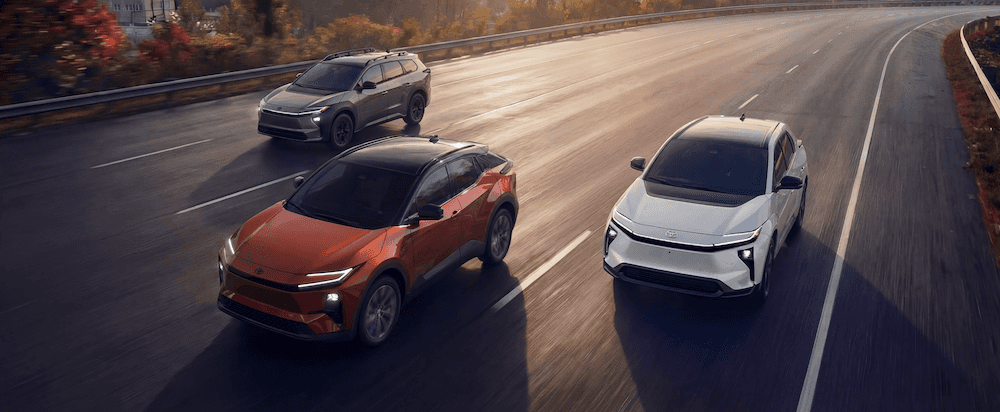
Understanding Toyota’s Electrified Vehicle Lineup
Before diving into charging, it’s important to understand the three main types of electrified Toyota vehicles. Knowing the differences between an EV, a PHEV, and a Hybrid will help you understand your vehicle’s charging requirements and what to expect from each type. Now that you know which type of electrified Toyota vehicle you have, it’s time to explore the charging options available and find the solution that best fits your lifestyle.
Toyota Electric Charging Options
There are two primary ways to charge at home.
Level 1 Charging
Uses a standard household 120-volt outlet.
Pros:
- No installation required
- Convenient for occasional charging
- Works anywhere with a regular outlet
Cons:
- Slowest charging speed
- Better suited for drivers with shorter daily commutes
Level 2 Charging
Uses a dedicated 240-volt charger installed at your home.
Pros:
- Much faster charging
- Ideal for overnight charging
- Most popular option for EV owners
- Convenient for plug-in hybrid owners who want to maximize electric driving
Many homeowners choose to install a Level 2 charger in their garage, making it easy to start each day with a charged battery.
Public Charging
Public chargers can be found at:
- Shopping centers
- Grocery stores
- Hotels
- Parking garages
- Workplaces
- Highway travel corridors
Depending on the charger and vehicle, charging speeds vary considerably. Many public charging stations can also be located using your Toyota’s navigation system or smartphone apps.
Frequently Asked Questions About Charging Toyota Vehicles
Do Toyota hybrids need to be charged?
No. Traditional Toyota hybrid vehicles recharge automatically while driving through regenerative braking and the gasoline engine. You never need to plug them in.
Do plug-in hybrids have to be plugged in?
Not necessarily. You can drive a plug-in hybrid without charging it. However, plugging it in allows you to maximize electric driving and improve fuel efficiency.
What happens if an EV battery runs out?
Unlike a gasoline vehicle, an EV cannot continue driving once the battery reaches an unusable charge level. That’s why it’s helpful to monitor your remaining range and plan charging stops on longer trips. Most drivers quickly become comfortable with this routine, especially if they charge at home overnight.
How long does charging take?
Charging time varies depending on several factors, including your vehicle’s battery size, the type of charger you use, the battery’s current state of charge, and even weather conditions.
Generally:
- Level 1 charging takes the longest.
- Level 2 charging is much faster and ideal for overnight charging.
- DC fast charging (where supported) can add a significant amount of range in a relatively short period.
Always consult your owner’s manual for charging recommendations specific to your Toyota model.
Can I charge every Toyota on the same charger?
Not exactly. Traditional hybrids do not plug in. Plug-in hybrids and battery electric vehicles use charging equipment designed for their charging systems and connector types. Many public charging networks support a wide range of compatible vehicles, but it’s still important to confirm compatibility before charging.
Is charging cheaper than buying gasoline?
For many drivers, charging at home can cost less than purchasing gasoline for the same distance traveled. Actual savings depend on:
- Local electricity rates
- Fuel prices
- Driving habits
- Charging location
Plug-in hybrids may also reduce fuel costs if most daily trips are completed using electric power.
Can weather affect charging?
Yes. Cold temperatures can reduce charging speed and driving range, while very hot weather may affect charging performance as the vehicle manages battery temperature. Toyota engineers its battery systems to operate across a wide range of conditions, including the hot summers common in Texas.
Is it safe to charge in the rain?
Yes. Toyota charging equipment and public charging stations are designed for outdoor use when used according to the manufacturer’s instructions.
Will charging damage the battery over time?
No. Toyota designs its battery management systems to help protect battery health by controlling charging rates, temperatures, and other operating conditions. Following Toyota’s recommended charging practices helps support long-term battery performance.
Visit Toyota of Rockwall to Learn More!
Whether you’re interested in a fuel-efficient hybrid, a versatile plug-in hybrid, or Toyota’s latest all-electric technology, our team is here to help you compare models, answer your charging questions, and schedule a test drive!
We’ll walk you through charging options, explain the differences between each electrified Toyota, and help you find the vehicle that fits your lifestyle and driving needs. Stop by Toyota of Rockwall or contact our team at (469) 434-3231 today to explore Toyota’s growing lineup of hybrid, plug-in hybrid, and electric vehicles.
Disclaimer:
2026 battery electric vehicle models.
A 240V NEMA 14-50 outlet is required for Level 2 charging.
Actual range attainable per minute/hour of charging will vary significantly depending on speed, outside temperature, accessory use, how/where you drive, battery condition, vehicle model and other factors.
Public charging experience will vary based on charger type (Level 2 or DC Fast Charger) and other factors including vehicle and environmental conditions. 2026 bZ AC Level 2 charging time estimates can be improved when using an input power source rated to the onboard charger’s max capacity. 2026 bZ DC fast charging time estimates can be improved in freezing temperatures when activating the battery preconditioning function. See Owner’s Manual for more information.
* Public Charging: Accessing a charging network through the Toyota app requires an active compatible cellular network, a cellular network connection, and GPS signal. Services may also require enrollment in the selected charging network and account registration through the Toyota app as well as an active Remote Connect trial or subscription and acceptance of the Connected Services Terms of Use at www.toyota.com/content/dam/toyota/privacyvts/pdf/connected-services-terms-use.pdf and the Connected Services Privacy Notice at https://www.toyota.com/privacyvts/ through the Toyota app. Data charges may apply.
DC charging time will vary based on weather and other factors. DC charging times will increase as temperatures decrease, with significant increases possible at temperatures below freezing. Accessory use, battery level and condition, and charger specifications may negatively affect charging times. Use for comparison purposes only. See www.fueleconomy.gov and Owner’s Manual for details.
* Accessing the ChargePoint network through the Toyota app requires an active compatible cellular network, a cellular network connection, and GPS signal. Services also require enrollment in ChargePoint and account registration through the Toyota app, as well as an active Remote Connect trial or subscription and acceptance of the Connected Services Terms of Use at www.toyota.com/content/dam/toyota/privacyvts/pdf/connected-services-terms-use.pdf and the Connected Services Privacy Notice at https://www.toyota.com/privacyvts/. Data charges may apply.
* For Toyota BEVs and access only available for V3 and V4 chargers. 2025 and earlier BEV models require adapter for use.
* Actual range attainable per minute/hour of charging will vary significantly depending on speed, outside temperature, accessory use, how/where you drive, battery condition, vehicle model and other factors.
0 comment(s) so far on Everything You Need to Know About Charging Your EV | Rockwall, TX